Colorbond Fence Installation Price for Solitary Panels vs. Full Runs
People don't generally determine to replace a fencing because they woke up motivated by equipment and blog post spacing. It's normally prompted by something specific, like wind damages, a dodgy DIY job that's tottering in the breeze, a limit disagreement that needs a clean reset, or a colour adjustment that finally makes the front backyard resemble it belongs to the exact same house.
That's where the expense discussion obtains real. "What will it cost?" turns into 2 different concerns depending upon the scope: are you valuing a single Colorbond fence panel, or are you spending for a full encounter several limits? The unusual part is that the per-panel cost can look good for solitary areas, however the installer time and configuration costs are the same, so the "ordinary cost" can turn regardless once the task is mounted properly.
Let's go through how Colorbond fence price and Colorbond fence cost actually act, making use of functional examples from the type of work that come with local secure fencing schedules.
Single panels: why the price usually really feels more than you expect
A single panel substitute seems simple. A couple of metres of fencing, one section out of many, done. But the majority of fencing prices is driven by greater than simply the sheet metal.
For a solitary panel, the installer still needs to do the "access" job: arrive, verify the limit positioning, check existing blog posts and rails, prep the materials, and take care of the unpleasant little bits like eliminating bolts, handling concrete that's old or unequal, and making certain the new area matches the rest.
Even if the panel itself is just one piece, you still pay for:
- Site gain access to and staging
- Measuring and setting out
- Materials taking care of and wastage
- Labour to remove and re-install rails or articles (if needed)
- Time spent matching the existing appearance, specifically with colour and account continuity
In technique, the greatest expense chauffeur is whether the job really is "panel just," or whether the brand-new panel additionally compels adjustments to rails, spacers, or even a message. Individuals frequently uncover the real circumstance once the old section is opened up. Rusted fasteners snap. A rail is turned. An article is slightly out of plumb. You can replace a panel, however if the structure underneath is off, the new sheet won't rest cleanly.
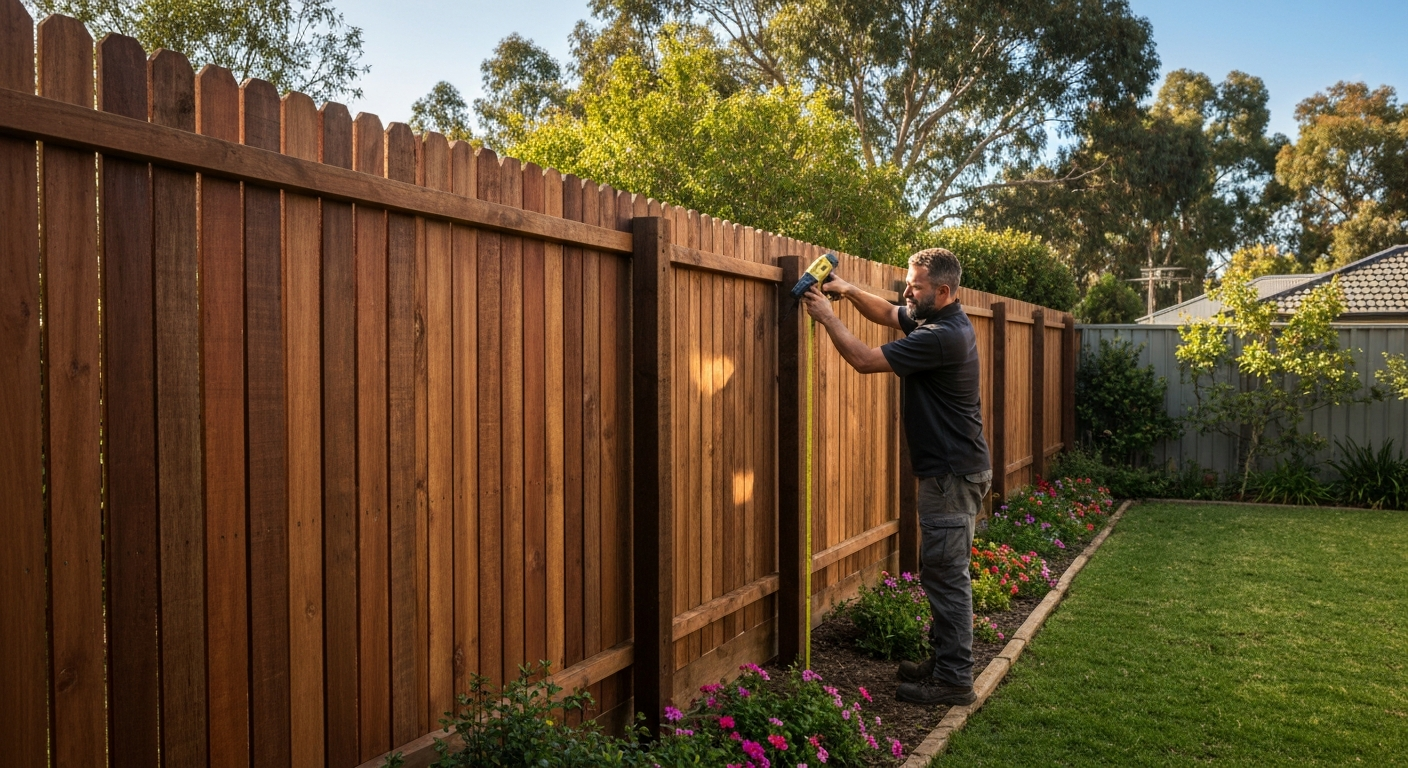
That's why you'll see "Colorbond fence installation price" priced quote as a per-job number for little repair work, even when the client's psychological design is per panel.
A sensible example: one panel, 2 outcomes
Let's say you're replacing one 3.6 m run section, and your existing structure remains in suitable problem. The installer can typically switch the sheet with very little changes. Because circumstance, the Colorbond fence construction price is still work plus materials, but the labour is much shorter and the waste is low.
Now picture the exact same panel, yet the initial rail links are harmed. You end up replacing a minimum of one rail and potentially cutting or re-setting an article. Suddenly the price is not concerning the sheet any longer, it's about the architectural modification. That's a common swing variable that transforms what you assume you're buying.
Full runs: the price per metre normally develops, but the total climbs
With a full run, the installer's day is structured around relocating along the boundary. Measuring and laying out happens once, blog posts obtain constantly spaced, rails get straightened as a system, and the group can run through their process without picking up tiny one-off adjustments.
So while your complete costs is bigger, the "effective" cost per metre tends ahead down because:
- Setup and mobilisation prices are spread throughout even more direct metres
- There's much less work lost to repeated dimension and re-checking
- Material ordering is a lot more reliable, meaning less odd cuts and much less offcut waste
- The installment workflow is smoother, especially if you're doing constant runs with matching heights and styles
This is why lots of quotes for "a complete run" feel more uncomplicated for clients. The rates is usually a base rate for the full period, then adjustments for problems like gates, returns, unequal ground, or any kind of areas where the old fencing isn't usable.
If you're comparing quotes, it assists to ask just how each quote manages the following: mobilisation, post installment, rail placement time, and whether products pricing consists of typical allocations for offcuts. Those small information are where "Colorbond fence cost" can differ between installers also when the fencing looks similar.
What really determines Colorbond fence cost, beyond the sheet size
When individuals speak about Colorbond fence price, they typically mean the top-line quote. But the quote is a community. If you wish to contrast solitary panels versus full runs effectively, you require to recognize the parts that behave differently relying on scope.
Posts, spacing, and exactly how the task starts
Posts are where a great deal of the cash lives. The bigger the work, the a lot more regular those expenses come to be per metre, because you're not paying added to "launch" again and again.
For single panels, you may be paying for a new blog post since the existing one runs out placement, or because the fix calls for an appropriate connection factor for rails. For complete runs, the installer can establish blog posts regularly from the beginning, and they can intend their line and level as opposed to reacting locally.
Rails and architectural matching
Some repairs are genuinely panel-only. Others need rails replaced due to the fact that a rail might be curved, missing fasteners, or otherwise suitable with the existing style.
Full runs usually include new rails throughout, that makes installment quicker and much more consistent. Solitary panel work commonly involve "make it match what's already there," and that matching job can take time.
Gates, edges, and boundary complexity
A complete keep up straight positioning throughout a lawn acts differently from a complete run that wraps around an edge, changes around a driveway, or includes a gateway. The same applies to a single panel if it happens to be near an edge or close to a gate frame where the architectural elements are different.
This is one factor "per panel" contrasts obtain messy. A solitary panel next to a gate can call for extra hardware, supports, or custom-made offsets, and it no more acts like a straightforward rectangular shape of fencing.
Access and ground conditions
If the installer can park near the website, wheel products in easily, and job from level ground, labour time is reduced. If the yard has slim accessibility, high inclines, or tree roots that complicate footing, the work time rises.
Single panels can be hit specifically hard by access issues because the installer can not "buffer" ineffectiveness across a longer run. For complete runs, time still costs money, however the installer is utilizing the day to finish even more lineal metres while handling the same gain access to constraints.
The compromise: higher unit price for single panels, however much less total spend
Here's the truthful method most homeowners experience it.
- Single panel job often tends to be priced with a "minimal work" component because the installer still needs time on site.
- Full runs frequently have a far better expense per metre, but the complete number is bigger.
If your goal is to fix a certain problem quickly, the single panel alternative can still be the smarter monetary choice. Yet if you're currently intending a fencing replacement, patching first can be a false economy.
I have actually seen this play out where someone changes one damaged section, after that a year later on the rest of the fence reveals comparable wear. Because the new area may match the style, they assume the system is "fresh enough" to hold. Occasionally it does, yet typically the continuing to be rails and blog posts are maturing also, and the next round of fixings arrives sooner than expected.
This is where your "Colorbond fence installer price" ends up being more than a number. It becomes a comparison in between short-term solutions and long-lasting consistency.

Where rates quotes can differ between installers
You can get two quotes for the same-looking fencing and see meaningful differences. A few of that is regular variation, yet a shocking portion originates from what's included.
When you're comparing quotes for Colorbond fence installation price or Colorbond fence construction price, look closely at the line products behind the scenes. Ask inquiries like:
- Does the quote include brand-new posts and rails, or only the sheet panels?
- Are any existing articles being recycled, and if so, what requirements makes a decision that?
- Is concreting consisted of, or is it "article in ground" with a specific assumption?
- Does the price consist of removal of old products, or is it supply-only plus install?
- How does the quote take care of tiny site variations, like dips in the ground or small set-backs?
Even if an installer does not intend to note every information, you can typically get clearness in a conversation. And if you can't, it deserves treating that as a danger, since scope creep is the adversary of good decision-making.
Single panel rates situations you'll recognize
Let's make this sensible. Exact dollars vary by region, fencing height, and the installer's setup expenses, so I will not pretend there's one universal number. However the patterns are consistent.
Scenario A: Panel-only replacement, structure in great condition
If the surrounding rails are straight, bolts are intact, and the blog post line is true, you pay mainly for the sheet and the work to switch it. The Colorbond fence cost right here is typically more foreseeable. It may look costly per panel compared with the "per metre" full-run rate, but the work stays small and quick.
Scenario B: Panel plus rail replacement
This takes place a lot. The panel falls short because the rail connection is compromised, or the rail is bent and the panel won't rest correctly. You could wind up changing one or both imprison that section. Currently your labour is higher, and your products listing increases.
Scenario C: Panel plus article reset or replacement
This is the "enjoy your spending plan" scenario. When blog posts are involved, the installer must measure for line and level, confirm spacing, and then repair the footing. You're now spending for an architectural modification, not a cosmetic swap. If you're comparing this to full-run rates, it can begin to look close to a more affordable complete replacement, relying on just how much of the fencing is aged and whether other sections are likely to adhere to the very same pattern.
Full run rates situations that typically change the final number
Full runs usually feel much easier to value, however there are still predictable adjustments.
- If your ground is irregular, the installer might need to step the fencing or utilize various base heights.
- If you have several edges, return angles, or in-between shifts, the rail cutting and set-up time increases.
- Gates require additional framing and stronger architectural components, and the equipment changes the products list.
A complete run likewise allows the installer standardise. They can run consistent post spacing, keep railway straight, and lower time invested double-checking regional fixes.
That's why the void between "solitary panel cost" and "complete run cost" is often primarily concerning arrangement and matching initiative. Complete runs do not eliminate intricacy, they spread it out.
A fast comparison in ordinary terms
If you're trying to make a decision, ask on your own whether you're acquiring a solution or getting a system.
A solitary panel is a solution. A complete run is a system. The system method costs much more ahead of time, however it stays clear of the "very same trouble, various location" cycle that can take place when you patch an aging fence.
In numerous yards, the best value comes when the timing straightens: you replace the whole boundary once, rather than doing multiple little repair work. But occasionally the fixing is the ideal move, particularly when you're not prepared for a full replacement, or when the remainder Colorbond 2.4m price of the fencing is genuinely still solid.
One way I like to clarify it to clients is this: the fencing does not care that you replaced one panel. Water and wind still move across the entire framework, and if the blog posts and rails are near completion of their life, the next failure factor is not a question of if, it's when.
When a solitary panel repair work makes the most sense
There are good factors to go small.
Sometimes the damages is isolated. An accident, a storm event, a regional impact throughout landscape design, or a narrow section that was poorly preserved. If the surrounding articles and rails are straight and the colour suit is attainable, a repair service can be tidy and affordable.
Also, if budget is tight, dividing the job can help. You can address the immediate safety or security concern initially, after that prepare a full run when you can afford it.
The trick is to examine the condition truthfully. If you can see corrosion on rails, loosened fasteners, or messages that lean, it might not deserve "saving" just the sheet panel. You might end up spending for the very same work once again quickly, simply in a various section.
When going right to a complete run is smarter
If you're currently taking a look at a fence that's aesthetically exhausted, it generally indicates surprise wear. Even if the panels look all right at a glance, the rails and blog post links take the hit from weather condition cycles and thermal movement.
A full run tends to be the smarter value when:
- The fencing is old enough that multiple areas most likely require structural correction
- You desire uniform colour and account across the boundary
- You strategy a long-term home renovation, like landscape design or painting adjacent areas
- You're managing sagging or misalignment that leaves several spans
Even if complete run prices looks higher, the decrease in duplicated mobilisation and matching job is typically what pointers it in favour.
How to get a quote that you can actually compare
This is the part that saves individuals from "low-cost quote regret."
If you're calling installers for a Colorbond fence installation price or Colorbond fence installer price, don't just ask for a number. Request the basis of the number.
Try to get clarity on whether the quote consists of everything required to complete the section to an expert criterion. If you're contrasting solitary panels to complete runs, you need to still ask the very same quality questions so you understand the comparison is apples to apples.
A sensible means to do it is to demand that the quote clarifies, in simple terms:
- What is being changed versus reused
- What articles and rails are included
- How height and alignment are managed on unequal ground
- Whether elimination and disposal are included
- What takes place if the existing structure is discovered to be substandard once the work starts
You do not require a lawful file. You require a quote that does not count on covert assumptions.
A brief list before you determine solitary panel or complete run
If you want a quick method to think it with without spiralling into spreadsheets, maintain these points in mind:
- Check whether the rails and messages in the damaged section are straight and safe, not simply the panel.
- Ask whether the quote includes post and rail work, or sheet replacement.
- Consider just how old the rest of the fencing is, and whether other sections show similar wear.
- Factor in gain access to restraints, due to the fact that they hit tiny jobs disproportionately.
- Decide whether you want a fixing currently, or a consistent fence system that matches everywhere.
That checklist sounds straightforward, however it's specifically what drives real-world pricing outcomes.
Cost state of mind: allocate truth, not just materials
One of one of the most common disappointments I listen to is when a customer compares the "sheet cost" to the quote total amount. The sheet is only component of the job. Work, framing, positioning, equipment, and on-site trouble addressing are where the money goes.
For single panels, that space really feels bigger due to the fact that the installer's set initiative is spread across much less product. For complete runs, the fixed effort is spread over even more linear metres, so the efficient cost per metre looks better.
If you're collaborating with a limited spending plan, you can also inquire about staged complete runs. For instance, you may replace one limit currently and prepare the other later on. That still offers you several of the full-run effectiveness within each task scope, instead of doing numerous solitary panel replacements over time.
Final idea: choose based on the fencing's condition, not simply the panel count
The best way to decide between Colorbond fence installation price for a single panel versus a complete run is to quit treating panels like standalone items. They remain on a structure, and that framework is either healthy adequate to support a quick repair or it's not.
If your fencing is mostly solid and you have a clear, separated area to repair, a single panel technique can be a reasonable, money-responsible choice. If your fencing is ageing, leaning, or revealing repeated problems, a complete run is typically the worth play, even if it seems like a bigger jump upfront.
Whichever path you select, see to it your quotes describe what is included. That's the difference in between a number that's simply an assumption and a number that shows the actual job the installer will do on your property.